
Views: 0 Author: Site Editor Publish Time: 2026-04-03 Origin: Site
Loose or messy wire connections can create more problems than many buyers expect. They make installation less efficient, maintenance more difficult, and long-term reliability harder to control. A Terminal Block is designed to solve that issue by creating a safe, organized, and stable connection point for conductors inside electrical and electronic systems. Whether the application is a control cabinet, inverter, power supply, energy storage unit, communication device, or industrial machine, understanding how a terminal block works helps users choose a more suitable connection method. Xinlianchuangfu manufactures terminal products for power electronics, industrial automation, communications, rail transit, and new energy equipment, and this article explains the working principle of terminal blocks in a clear and practical way.
A terminal block is used to connect conductors through a conductive metal path inside an insulated housing. Instead of relying on direct wire splicing or less organized connection methods, it provides a defined point where current can pass from one conductor to another in a more controlled way.
This function is important because a connection must be both electrical and mechanical. The wire has to stay firmly in position while also maintaining a stable current path. A terminal block is designed to handle both tasks at the same time. That is why it is widely used in professional wiring systems where safety, order, and reliability matter.
A terminal block does more than join wires. It also makes the whole wiring system easier to manage. In equipment with multiple conductors, terminal blocks help keep connections arranged clearly, which improves installation quality and reduces confusion later.
This organized structure is one of the main reasons terminal blocks are so valuable. When a wire needs to be inspected, replaced, or disconnected, the process is much easier than with direct splicing. For buyers, that means a terminal block offers not only a connection point, but also practical benefits in servicing and troubleshooting.
The insulating body is the outer housing of the terminal block. Its purpose is to separate conductive parts and help protect users from live metal components. It also supports the overall structure of the terminal and helps maintain proper spacing between adjacent connections.
A good housing contributes to both safety and installation quality. In many applications, the housing also helps the wiring arrangement stay neat and secure, especially when many terminals are installed close together.
Inside the housing is the conductive metal element. This is the part that actually carries current through the terminal block. When a conductor is inserted and secured, the internal metal element creates the electrical bridge that allows power or signals to pass through the connection.
The quality of this metal part directly affects conductivity, heat handling, and long-term performance. A better internal conductor design usually supports a more stable and durable electrical connection.
The clamping mechanism is the part that holds the wire in place. Depending on the type of terminal block, this may be a screw, spring, or push-in structure. Its role is to press the conductor firmly against the conductive metal path so the connection stays reliable.
This part is essential because the connection depends on pressure as much as contact. If the wire is not secured properly, resistance can increase, heat can build up, and the conductor may loosen over time. A good clamping design helps avoid those problems.
The working process is simple and repeatable. First, the insulation is stripped from the end of the wire. Then the exposed conductor is inserted into the terminal opening. After that, the conductor is secured by tightening a screw, activating a spring clamp, or pushing it into place, depending on the design. Once this is done, the wire makes firm contact with the internal metal element, and the electrical path is completed.
This process is one of the reasons terminal blocks are so widely used. They turn wire connection into a more standardized and controllable step. That makes the wiring cleaner, more consistent, and easier to inspect.
The most important detail in how a terminal block works is contact pressure. The conductor must not only touch the internal metal path, but be pressed firmly enough to maintain low resistance and stable performance over time.
Good contact pressure helps reduce electrical loss, limit heat buildup, and prevent loosening caused by vibration or repeated use. This is why terminal blocks that look similar from the outside may still perform differently in real applications. Reliable clamping force is one of the key factors behind a dependable connection.
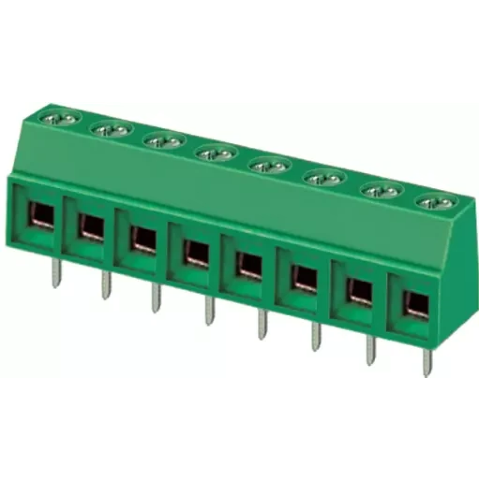
Screw terminal blocks use a screw to apply pressure to the conductor. When the screw is tightened, the wire is clamped firmly against the conductive element, creating both a mechanical hold and an electrical connection. These terminal blocks remain popular because they are straightforward, dependable, and familiar to installers.
They are often used in general equipment, control systems, and many standard wiring tasks where a simple and proven connection method is preferred.
Barrier terminal blocks are designed with physical barriers between adjacent terminals. These barriers help separate circuits and improve safety, especially in wiring layouts where exposure or current level requires clearer isolation between connections.
Because of this structure, barrier terminal blocks are often used in applications where circuit separation and orderly wiring are especially important. They are practical in power-related systems and other arrangements where a cleaner, safer layout is beneficial.
Pluggable terminal blocks use a plug-and-socket design. One section is fixed to the equipment, while the other section holds the wire and can be connected or removed more easily. The working principle is still based on stable electrical contact, but the structure makes the system more convenient for installation and servicing.
This is particularly useful in modular equipment or products that need frequent maintenance. If a section needs to be replaced or disconnected, pluggable terminal blocks save time and simplify handling.
DIN rail terminal blocks are designed to mount onto standardized DIN rails inside cabinets and control panels. At the conductor level, they work like other terminal blocks, but their mounting style makes them especially useful for organized panel wiring.
They are widely used in industrial automation, switch cabinets, and control systems because they support clean layout, easier expansion, and more efficient cable management. For larger wiring systems, this organization is a major advantage.
Terminal blocks are widely used in industrial control systems, PLC cabinets, machinery wiring, and automation equipment. These systems often involve many conductors, and terminal blocks help keep them organized and easier to service.
In this environment, wiring clarity is not only convenient but necessary. A structured connection system improves installation, reduces troubleshooting time, and supports safer operation.
Power supplies, inverters, charging equipment, power distribution units, and energy storage systems also rely heavily on terminal blocks. In these applications, the connection point must support stable current flow while remaining safe and manageable.
That is why different types such as barrier terminal blocks, high-current terminal blocks, and DIN rail products are commonly used in the power and energy field.
Terminal blocks are also common in electronic equipment that requires easier maintenance or modular replacement. If wires may need to be checked, removed, or upgraded in the future, terminal blocks make that process much simpler.
Instead of rebuilding a connection from the beginning, technicians can work directly with a structured connection point. This is one reason they remain useful in both industrial and commercial equipment.
The internal metal parts strongly influence how well a terminal block performs. Better material quality usually means better conductivity, stronger durability, and more stable heat performance. A well-designed conductor path also improves long-term reliability.
Even a good terminal block can work poorly if the conductor size is wrong or the installation is careless. The wire must match the terminal design, and it must be inserted and secured correctly. Poor installation can reduce contact quality and shorten service life.
The working environment also matters. Heat, vibration, moisture, dust, and contamination can all affect connection stability. A terminal block that performs well in a clean indoor product may not be the best option for a more demanding industrial or power application.
Type | Connection Method | Main Strength | Best Application | Maintenance Advantage |
Screw terminal block | Wire secured by screw pressure | Strong general-purpose connection | General equipment and control systems | Easy to inspect and retighten |
Barrier terminal block | Separate terminals with physical barriers | Better circuit separation and safer layout | Higher-current or exposed wiring | Clearer wiring management |
Pluggable terminal block | Plug-and-socket connection | Fast disconnection and reconnection | Modular and serviceable equipment | Quick replacement and servicing |
DIN rail terminal block | Mounted on DIN rail | Organized cabinet wiring | Control panels and industrial racks | Easy expansion and neat arrangement |
This comparison shows that terminal blocks all follow the same core principle, but different structures support different installation, maintenance, and application needs.
A terminal block works by combining insulation, conductivity, and mechanical clamping into one controlled connection point, making wiring cleaner, safer, and easier to maintain. Once buyers understand this working principle, it becomes easier to choose the right style for the task, whether that means a screw type for general use, a barrier type for clearer separation, a pluggable type for faster servicing, or a DIN rail type for organized panel wiring. Xinlianchuangfu provides terminal solutions for power electronics, industrial automation, communications, and energy systems where dependable connections are essential in daily operation. If you are evaluating connection products for your equipment, contact us to discuss the right wiring block solution for your application.
The main purpose of a terminal block is to provide a safe, organized, and reliable connection point between conductors. It improves wiring quality and makes installation and maintenance easier.
A terminal block uses a clamping mechanism such as a screw, spring, or push-in structure to press the conductor against the internal metal path and keep the connection stable.
They are useful because they allow faster disconnection and reconnection, which makes servicing, replacement, and modular wiring more convenient.
They are commonly used in control cabinets, automation panels, industrial racks, and switch systems where organized and expandable wiring is needed.


