


| Quantity: | |
|---|---|
Center Space | 6.00mm |
Rated Current | 60A |
Screw | M5 |
Terminal Body | Brass, Tin Plated |
Screw Torque | 18 lbf·in |
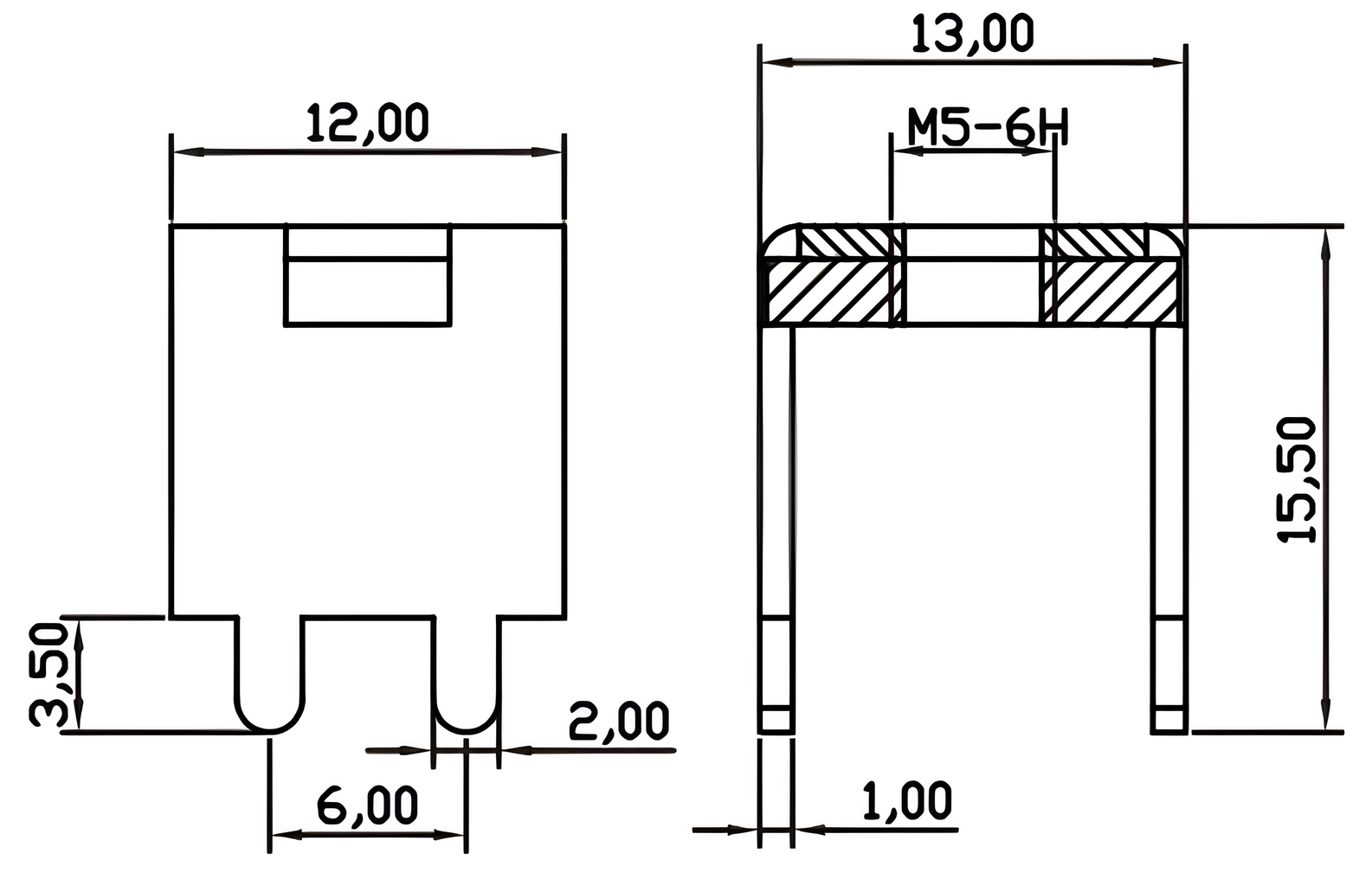
ACU 04525-T1 Product Diagram
Featuring a 5.08mm center space (compatible with standard PCBs) and a 300V AC/DC, 12A rating, it operates across an extended temperature range of -40℃ to 125℃—20℃ higher than typical medium-power terminals. This makes it ideal for harsh thermal conditions (e.g., automotive engine bays, industrial ovens). Constructed with heat-resistant PA66 insulation (reinforced with glass fiber) and nickel-plated brass terminals, it maintains performance at extreme temperatures while meeting UL94 V-0 flame retardancy. Its 4000V surge voltage resistance protects sensitive devices (e.g., temperature sensors, motor controllers) from power spikes, and a 12.5mm width balances space efficiency with thermal durability. Whether used in EV charging auxiliaries or high-temp industrial tools, the MCU-04525-T1 delivers reliable connectivity in heat-intensive settings.
Thermal-Enhanced PA66 Insulation: Modified PA66 with 25% glass fiber reinforcement retains structural integrity at 125℃ (257℉)—preventing melting or warping in engine bays (up to 120℃) or industrial ovens (up to 110℃). It still meets UL94 V-0 flame retardancy, self-extinguishing within 10 seconds of flame exposure.
Nickel-Plated Brass Terminals: Nickel plating adds heat resistance (up to 150℃) and corrosion protection, unlike standard brass. This ensures low resistance (<0.0015Ω per terminal) and minimal heat generation even at maximum 12A current.
Ceramic-Coated Screws: M3 steel screws feature a ceramic coating that resists thermal expansion, maintaining tight connections as temperatures fluctuate (e.g., from -40℃ to 125℃ in automotive applications).
Medium-High Power Rating: 300V/12A capacity fits high-temp applications like engine bay sensors (12V DC/5A), industrial fan drives (24V DC/10A), or EV on-board charger (OBC) auxiliaries (48V DC/8A).
Surge Voltage Protection: 4000V transient resistance shields devices from heat-induced power fluctuations (e.g., industrial heater cycling) or lightning-related spikes, reducing downtime.
Wire Compatibility: Accepts 28–14 AWG wires, covering thin thermocouple wires (28 AWG for high-temp sensors) and thicker power wires (14 AWG for small motors). The clamping mechanism accommodates both solid and stranded wires, with a recommended stripping length of 9mm for optimal contact.
PCB & Panel Compatibility: The 5.08mm center space aligns with standard PCB hole patterns, simplifying assembly in mass-produced high-temp devices (e.g., automotive ECU sensors). Mounts to 3.2mm holes with M3 screws (torque: 4.5 lbf·in max).
Supports 2P to 6P configurations, with total length calculated as L = 5.08mm × Poles. A 4P setup (20.32mm total length) fits into 22mm-wide high-temp enclosures (e.g., industrial oven control boxes).
Engine Sensors & Actuators: Connects power and signal wires for temperature sensors, fuel injectors, and ignition coils. The -40℃ to 125℃ range withstands engine bay heat, while nickel-plated terminals resist oil and coolant corrosion.
EV Charging Auxiliaries: Used in EV OBC wiring for temperature monitoring modules and cooling fan controls. The thermal-enhanced insulation handles heat generated during fast charging (up to 115℃), preventing insulation degradation.
Industrial Ovens & Furnaces: Integrates into temperature control panels, heating element power lines, and door switch circuits. The 125℃ tolerance matches oven ambient temperatures, while UL94 V-0 flame retardancy reduces fire risk.
Plastic Molding Machines: Connects sensors and small motors in heated barrel zones (up to 120℃). Surge protection safeguards against power spikes from heating element cycling, ensuring consistent machine operation.
Solar Panel Junction Boxes: Used in solar array wiring for bypass diodes and temperature sensors. The -40℃ (cold winters) to 125℃ (hot summers) range handles outdoor extremes, while nickel-plated terminals resist UV-induced corrosion.
Aviation Ground Equipment: Suitable for aircraft engine heaters and maintenance tools that operate in extreme cold (-40℃) or hot (100℃) tarmack conditions.
The "T1" denotes the terminal’s thermal-enhanced design, including modified PA66 insulation (125℃ max temp) and nickel-plated brass terminals. This distinguishes it from standard MCU-series terminals (max 105℃) and makes it suitable for high-heat applications like engine bays or industrial ovens.
No. Its 300V rating is below 480V AC requirements. For 480V applications (e.g., 3-phase motor controls), use a high-voltage terminal block (e.g., BHD series with 600V rating) to avoid insulation breakdown and safety hazards.
Use a 9mm stripping length for all wires. This ensures the conductor makes full contact with nickel-plated terminals, minimizing resistance and heat generation—critical in high-temp environments where excess heat can accelerate insulation aging.
No—installation steps are identical to standard terminals. Use a torque wrench to tighten M3 screws to 4.5 lbf·in (max). The ceramic coating only enhances thermal stability; it does not change screw size or compatibility with standard tools.
Inspect every 3–6 months (more frequently in 110℃+ settings):
Check for loose screws (retighten to 4.5 lbf·in if needed).
Inspect insulation for discoloration (a sign of overheating)—replace if damaged.
Verify terminal corrosion (nickel plating should remain intact; replace if flaking).


