
Views: 0 Author: Site Editor Publish Time: 2026-04-07 Origin: Site
Using a Terminal Block correctly is simple, but only when the basics are handled properly. Many wiring problems come not from the product itself, but from incorrect stripping length, poor tightening, wrong wire size, or choosing the wrong block style for the job. Good terminal block wiring is about more than making a connection. It is about making a connection that stays safe, stable, and easy to maintain. Xinlianchuangfu manufactures terminal products for power electronics, industrial automation, communications, rail transit, charging systems, and new energy equipment, and this guide explains how to use a terminal block in a practical and reliable way.
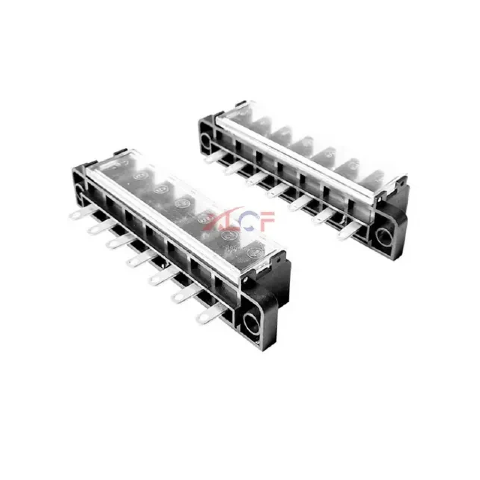
The first step is to identify the product type. A PCB terminal block is used directly on the circuit board. A barrier terminal block is often chosen where circuit separation is important. A pluggable terminal block is better suited to easier disconnection and servicing. A DIN rail terminal block is designed for organized cabinet and panel wiring.
If the terminal type is misunderstood, the installation method may be wrong from the beginning. That can reduce connection quality and make maintenance more difficult later.
Before wiring starts, check the basic specifications. Current rating, voltage rating, and wire size range all matter because they determine whether the terminal block matches the real application. It is also important to confirm whether the product is suitable for solid wire, stranded wire, or both.
Skipping this step often leads to avoidable problems. A terminal block should always be used within its intended electrical and mechanical limits.
Correct stripping length is one of the most important basics. If the stripped section is too short, the conductor may not make full contact inside the terminal. If it is too long, exposed conductor may remain outside the housing, which affects safety and appearance.
A correct strip length allows the wire to sit properly in the clamping area and helps create a cleaner, more stable connection.
The conductor should also be checked before insertion. Damaged strands, oxidation, bent wire, or contamination can all affect the quality of the connection. Even a good terminal block will not perform well if the wire is poorly prepared.
For stranded wire, ferrules may be useful in some applications to improve insertion quality and keep loose strands under control.
For a screw terminal block, insert the prepared wire fully into the terminal opening and make sure the conductor is positioned correctly. Then tighten the screw until the wire is held firmly. After that, do a light pull-check to confirm that the connection is secure.
The goal is stable clamping, not excessive force. A properly installed wire should stay in place without being damaged.
Push-in and spring-assisted terminal blocks work differently because they rely on built-in clamping force. In many cases, the wire can be inserted directly, and the spring mechanism secures it automatically. This makes wiring faster, especially in installations with many conductors.
Even with these styles, wire preparation still matters. The conductor must be inserted fully and checked afterward for a firm hold.
A pluggable terminal block is usually wired in the plug section first. Once the conductors are secured there, the plug is connected to the fixed header on the equipment. This structure makes installation and replacement easier, especially in modular or serviceable systems.
The final step is to confirm that the plug is fully seated. A partly connected plug can affect reliability even if the wire itself is secured properly.
Good wiring should be neat, easy to trace, and accessible for inspection or maintenance. When wires are crowded, crossed, or poorly routed, later servicing becomes more difficult and mistakes are more likely.
Spacing and labeling also help. A clear layout improves both safety and long-term maintenance efficiency.
Different terminal block styles have different mounting requirements. PCB terminal blocks belong to board-level assemblies, while DIN rail terminal blocks are designed for cabinet layouts. Panel-mounted products follow another installation logic.
Using the correct mounting method helps avoid unnecessary stress on the terminal and supports better connection stability.
After wiring, check the connection mechanically. A light pull test is one of the easiest ways to confirm that the conductor is properly secured. Visual inspection is also important to make sure there is no exposed conductor, loose insertion, or incorrect alignment.
These simple checks can prevent bigger problems once the equipment is in service.
The connection should also be checked from an electrical point of view. The terminal block must suit the actual load and operating conditions. If a connection becomes unusually warm during operation, that may indicate poor contact or incorrect product selection.
A working connection is not always a reliable one, so electrical suitability should be confirmed as part of the process.
If the connection is too loose, resistance may rise and the wire may shift. If it is too tight, the conductor may be damaged. Both problems reduce reliability.
A wire that is too small may not be held securely, while a wire that is too large may not fit or clamp correctly. Matching the conductor to the terminal design is essential.
Not every terminal block suits every task. A product used in control wiring may not be right for higher-current layouts, and a fixed terminal may not be ideal where frequent disconnection is needed. The product type should always match the installation task.
Step | What to Do | Why It Matters | Common Mistake |
Identify the type | Confirm whether it is PCB, pluggable, barrier, screw, spring, or DIN rail | Different types are used differently | Treating all terminal blocks the same |
Check specifications | Review current, voltage, and wire range | Prevents mismatch | Ignoring rating limits |
Strip the wire correctly | Remove the right amount of insulation | Supports full contact | Too short or too long stripping |
Inspect the conductor | Check for damage or oxidation | Improves stability | Using damaged wire |
Secure the wire | Tighten or clamp properly | Creates a stable connection | Over-tightening or under-tightening |
Inspect the result | Pull test and visual check | Confirms installation quality | Skipping final inspection |
This checklist shows that terminal block wiring is a step-by-step process. When each step is done properly, the finished connection is cleaner, safer, and more dependable.
Using a terminal block correctly means identifying the product type, matching the specifications, preparing the wire carefully, securing the conductor properly, and checking the finished connection before operation. When these basics are followed, terminal block wiring becomes faster, cleaner, and more reliable across many kinds of equipment. Xinlianchuangfu provides terminal solutions for power electronics, industrial automation, communications, and energy systems where stable connections matter every day. If you are comparing products or planning a new wiring layout, contact us to discuss the right connection block solution for your application.
You should first confirm the terminal block type and review its current, voltage, and wire size specifications.
Because correct stripping length helps the conductor make full contact inside the terminal without leaving unsafe exposed wire outside.
A light pull test and visual inspection are the simplest ways to confirm that the wire is properly installed.
No. Different terminal block styles are designed for different uses, so the product should always match the installation task and working conditions.


